
Scaling Enterprise Product Experiences Through a Design System
Creating reusable foundations, components, and interaction patterns that helped teams build consistent experiences across Extreme Networks products.
Product
Extreme Design System
Role
Sr. Product Designer
Team
3 Designers • 50+ Cross-functional Team
Duration
1+ years
Platform
Web/ Desktop
Overview
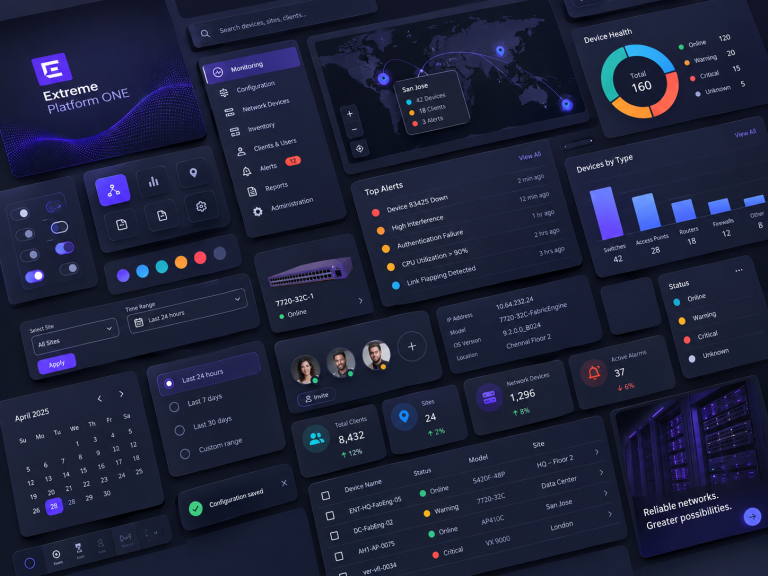
Extreme Networks was evolving toward a unified product experience across its enterprise platform. As products and workflows expanded, teams needed a shared foundation that could maintain consistency while supporting the complexity of enterprise network management.
As part of the Extreme Design System team, I helped build and evolve the system from the ground up, creating reusable components, interaction patterns, and documentation. I also partnered with product designers and engineers to translate real product needs into scalable solutions that could be reused across experiences.
My role
Senior Product Designer
Focus
- Design System
- Interaction Patterns
- Component Design
- Data Visualization
- Design Tokens and Variables
- Documentation
Collaboration
- Product Designers
- Engineers
- Product Teams
The Challenge
Creating consistency without limiting product teams
The challenge wasn’t simply creating a library of reusable UI components. As multiple teams designed complex workflows across the Extreme ecosystem, the system also needed to establish consistent interaction behavior and clear guidance for how patterns should be applied.
We needed to balance two competing needs: standardization across products and enough flexibility to support complex enterprise workflows.
Create a shared system that could scale across products without limiting the flexibility teams needed to solve complex enterprise problems.
My Contributions
My role extended beyond creating UI components. I worked across the system to establish reusable foundations, define interaction behavior, support product teams, and document how solutions should be applied.
I contributed across six areas:
Creating the foundation for a consistent and adaptable system
I contributed to the foundational layer of the design system, working with design tokens and variables to establish reusable visual decisions across the product experience.
These foundations helped support consistency across themes and provided a structured way to manage properties such as color, typography, spacing, and other system-level values as the product evolved.
What I worked on:
Design tokens · Variables · Color · Typography · Dark and light themes
Building reusable UI foundations
I contributed to designing and evolving reusable components with clearly defined anatomy, variants, states, and configuration options. The goal was to create flexible building blocks that product designers could combine across different enterprise workflows without introducing unnecessary one-off solutions.
What I worked on:
Component anatomy · Variants · States · Configuration · Theming
Defining consistent behavior across complex workflows
I worked with product designers to define reusable interaction patterns for recurring UX problems. These patterns established how multiple components worked together, how interactions behaved across states, and how users moved through common workflows.
What I worked on:
Reusable behaviors · Interaction rules · Multi-component patterns · Workflow consistency
Creating consistency for complex enterprise data
Data visualization was an important part of the system because Extreme’s products rely heavily on data to communicate network health, status, performance, trends, and other operational information.
I contributed to visualization solutions that helped teams represent complex datasets consistently across product experiences while maintaining enough flexibility to accommodate different data and workflow requirements.
The work considered not only how data should look, but how visualization elements should communicate hierarchy, status, relationships, and meaning across different contexts.
What I worked on:
Charts · Data states · Visual hierarchy · Semantic color · Visualization behavior
Making the system understandable and reusable
A component or pattern only scales when other teams understand how to use it.
I created documentation and usage guidance that captured how components and patterns should behave and when they should be applied. This gave designers and engineers a shared reference for implementing system solutions consistently.
Documentation also helped preserve the reasoning behind design decisions so teams didn’t need to rely solely on the designers who originally created a solution.
What I worked on:
Usage guidance · Anatomy · Behavior · States and variants · Examples · Interaction guidance
Connecting the design system with real product needs
The design system evolved through continuous collaboration with the teams using it.
I partnered with product designers to review their workflows, understand component and pattern requests, and determine whether existing system solutions could support their needs. When gaps emerged, we explored how a new solution could address the immediate product problem while remaining reusable across other experiences.
I also provided guidance on how components and patterns could be integrated into product designs, creating a continuous feedback loop between the design system and the products it supported.
What I worked on:
Design reviews · Product requirements · Pattern requests · System guidance · Cross-team collaboration
How the System Evolved
Built around real product needs
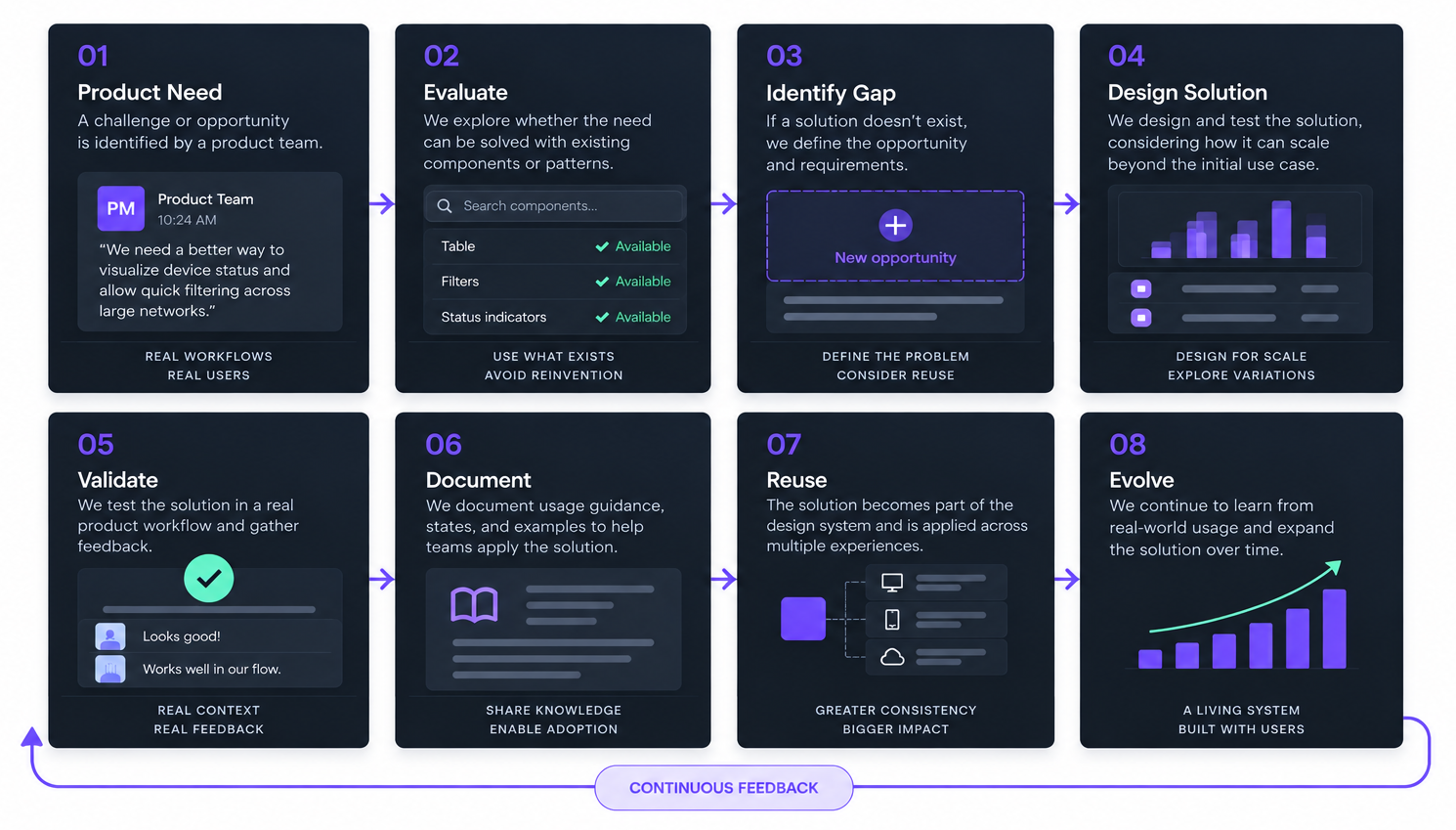
The design system evolved alongside the products it supported. New requirements often emerged from real workflows being designed across Extreme’s product ecosystem.
Rather than introducing a new solution for every request, we evaluated whether the need could be addressed through the existing system. When gaps emerged, new solutions were designed with reuse and scalability in mind before becoming part of the system.
From System to Product
Bringing the design system into real enterprise experiences
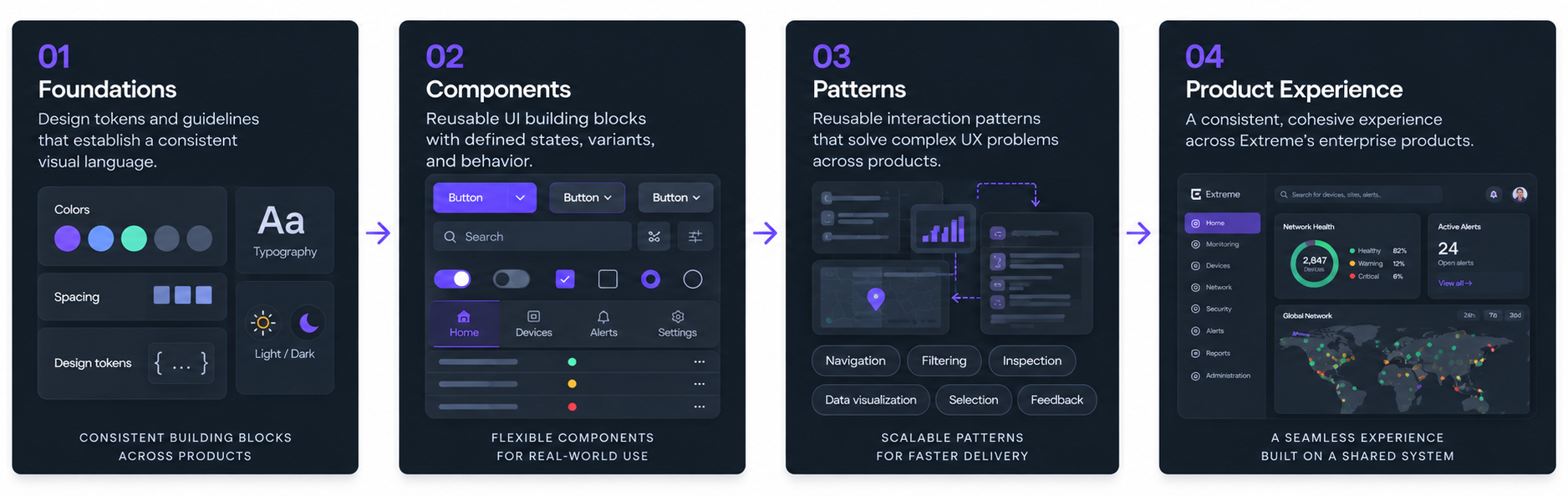
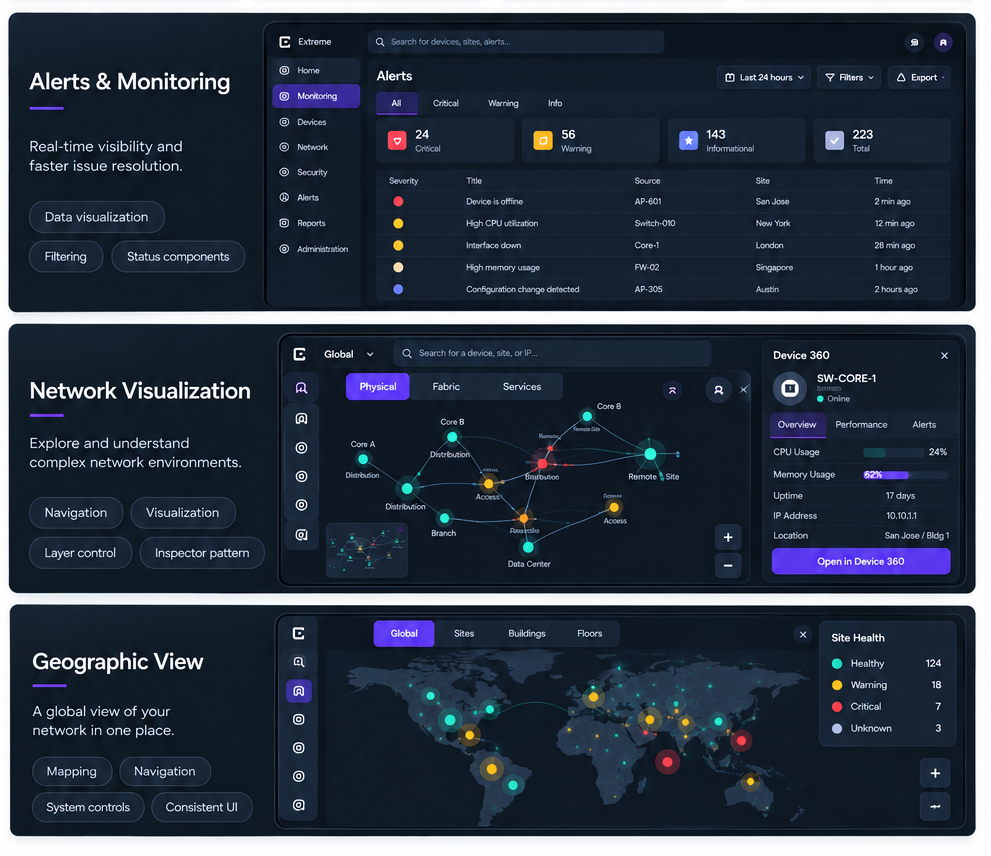
The Extreme Design System provided a shared foundation for the products our teams were building. Design foundations, reusable components, interaction patterns, data visualization, and documentation came together within real workflows across the Extreme product ecosystem.
Working closely with product designers and engineers, we applied and evolved the system as new product needs emerged. This helped create more cohesive experiences while allowing individual workflows to address their specific requirements.
Impact
Creating consistency at scale
Shared language
Established common foundations, components, and interaction behaviors across product experiences.
Greater consistency
Helped teams create more cohesive experiences across complex enterprise workflows.
Less reinvention
Reusable solutions gave designers a foundation for recurring UX problems.
Scalable evolution
Real product requirements continuously informed and expanded the system.
Reflection
Designing systems changed how I approach product problems
Working on the Extreme Design System changed how I think about individual product problems. A solution doesn’t necessarily have to end with the screen where the problem originated.
Designing at the system level taught me to look for recurring needs, identify opportunities for reuse, and consider how an interaction could scale across different contexts without sacrificing usability.
The question became not only “How should this experience work?” but “Could this solution work across experiences?”