
Flip Habits Designing a Behavior Change App Beyond Habit Tracking
An end-to-end iOS experience that helps people replace unwanted habits with positive behaviors while tracking progress and staying motivated.
Product
Flip Habits App
Role
Product Designer
Scope
End-to-end concept
Duration
3 months
Platform
Mobile App
Overview
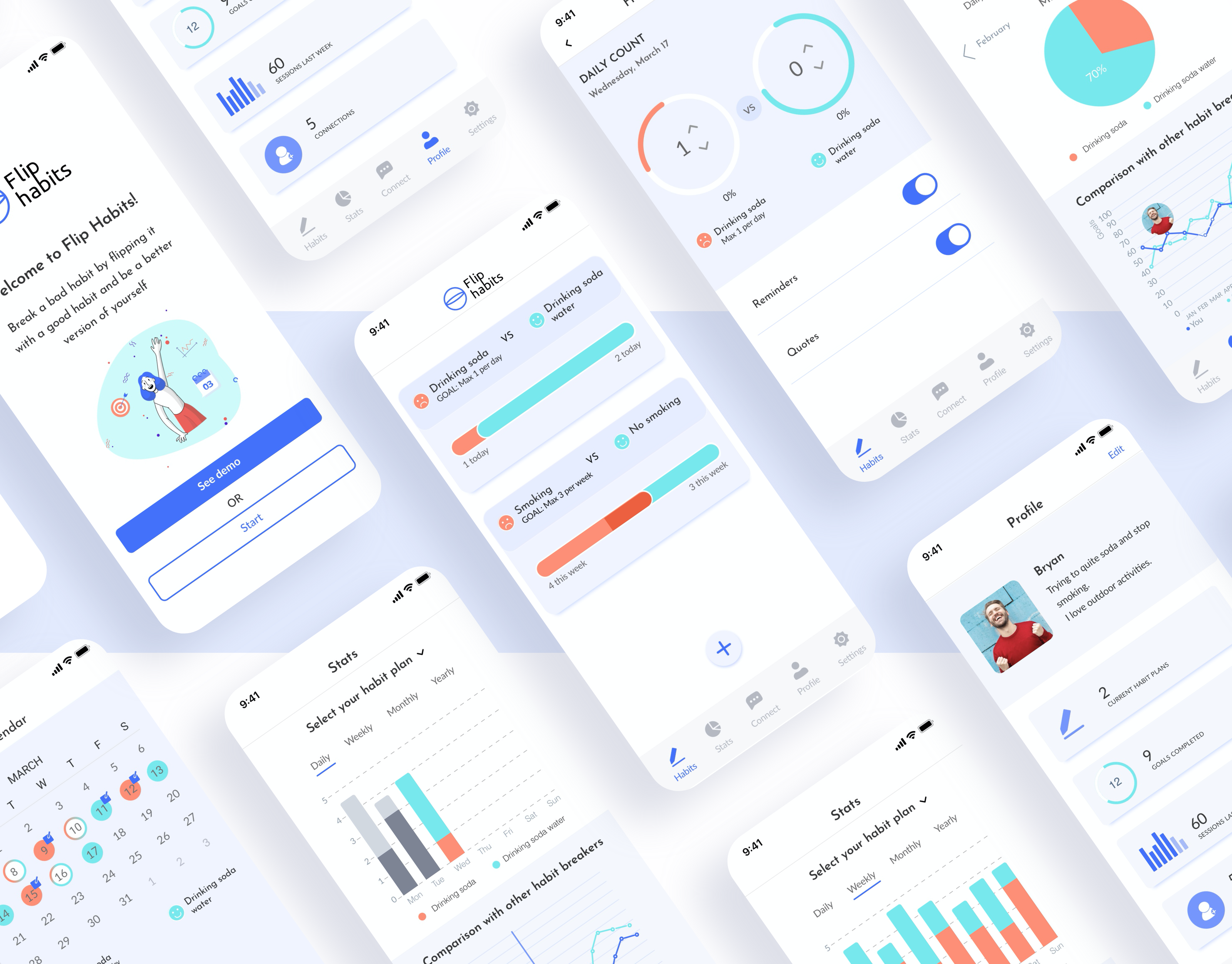
Flip Habits is an iOS mobile app designed to help people break unwanted habits by replacing them with positive behaviors. Inspired by the X Effect method, the experience combines habit planning, progress tracking, reflection, and encouragement to help users stay motivated throughout their behavior-change journey.
I designed the product end to end, from user research and product definition through UX/UI design, branding, prototyping, usability testing, and iteration.
The Challenge
Most habit apps focus on tracking streaks and maintaining consistency. But breaking an unwanted behavior involves more than recording whether it happened.
The challenge was to design an experience that could help users create an actionable plan, understand their progress, and stay motivated while replacing an unwanted habit with a more positive behavior.
How might we help people move beyond tracking a bad habit and actively build a better one in its place?
Research
Understanding what helps people change a habit
To understand what motivates people to break unwanted habits, the challenges they face, and the strategies they use, I conducted secondary research, competitive analysis, and user interviews.
Secondary research helped me understand common behavior-change approaches and the role progress, replacement behaviors, and motivation can play in changing habits.
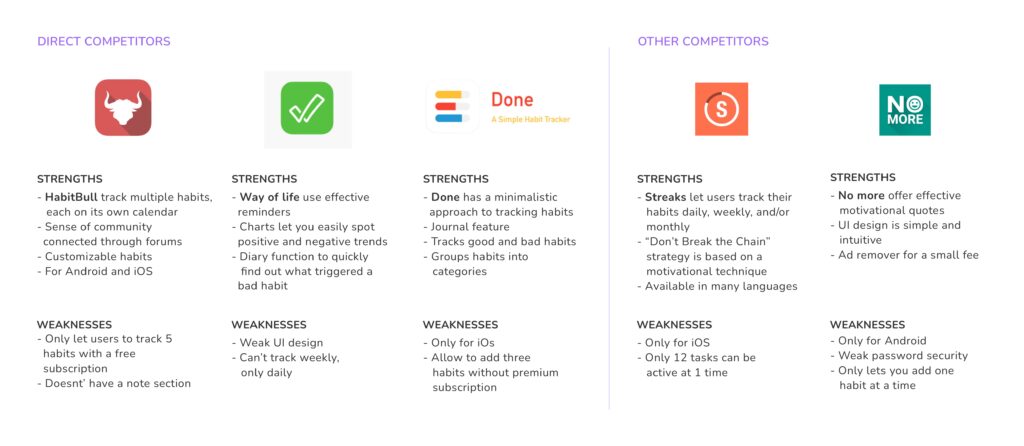
I analyzed direct and indirect competitors to understand how existing products support behavior change and identify opportunities for Flip Habits.
Common Approach
Most competitor apps relied on variations of the “Don’t Break the Chain” method, using streaks and visual progress tracking to encourage consistency.
Common Features
Progress calendars, reminders, motivational content, and trend reports were commonly used to help users track progress and stay motivated.
Opportunity
While competitors were effective at showing progress, there was an opportunity to go beyond tracking and help users create an actionable plan for replacing an unwanted habit with a positive behavior.
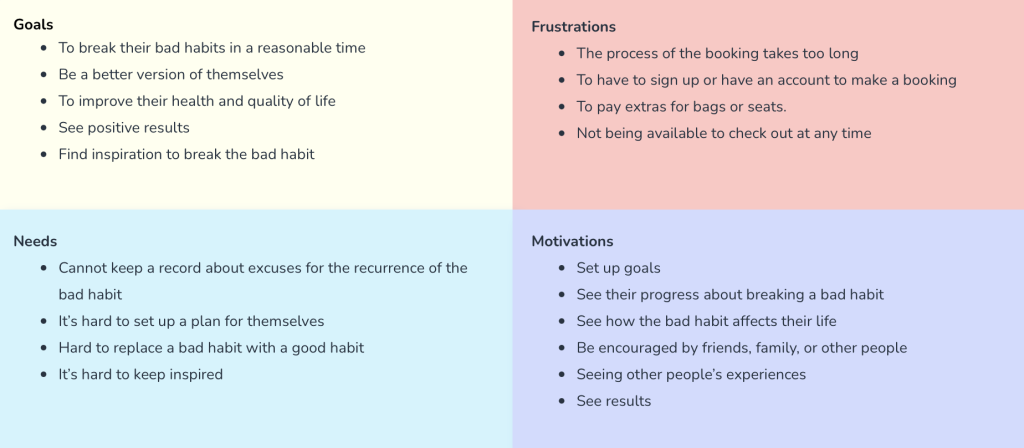
User interviews revealed that breaking a habit involved more than simply stopping a behavior. Participants commonly described creating a plan and replacing an unwanted habit with a positive one as part of their approach.
Progress matters
Seeing progress and positive results helped users stay motivated.
Shared experiences provide support
Seeing others working through similar challenges helped users feel supported in reaching their goals.
Encouragement reinforces motivation
Support from friends, family, and others was an important source of encouragement throughout the process.
RESEARCH FINDINGS
Competitors
Interview Findings
Key Insight: Tracking progress tells users how they’re doing. It doesn’t necessarily tell them what to do differently.
This shifted the product concept from simply tracking bad habits to helping users replace them with positive alternatives.
Shaping the Experience
Translating Research Into Product Structure
I translated the research findings into a clear product structure, defining the target user and mapping the key interactions that would support their habit-change journey.
01 · Persona
Who are we designing for?

Represented the goals, motivations, needs, and frustrations uncovered during research.
02 · Sitemap
What does the experience need to support?
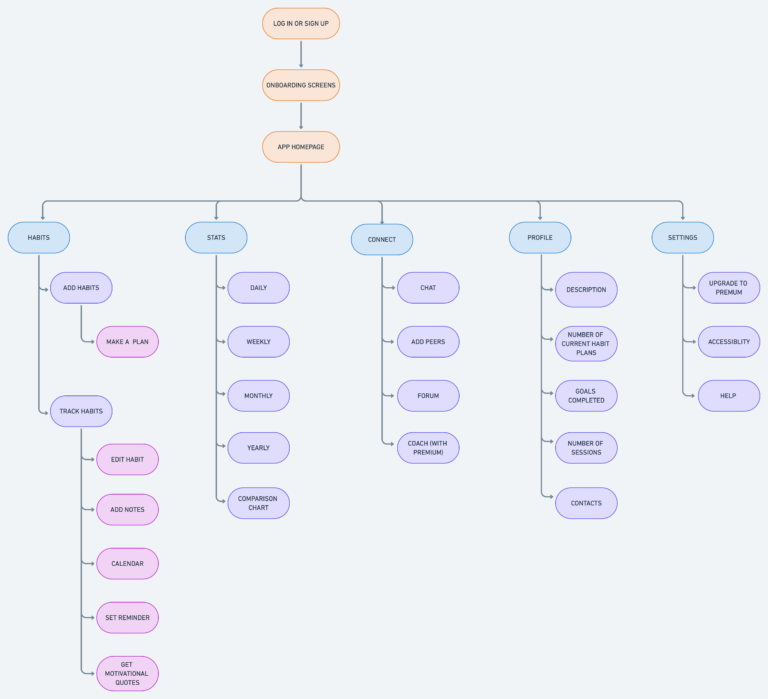
Translated user needs into the product’s core features and information architecture.
03 · User Flow
How will users move through the experience?
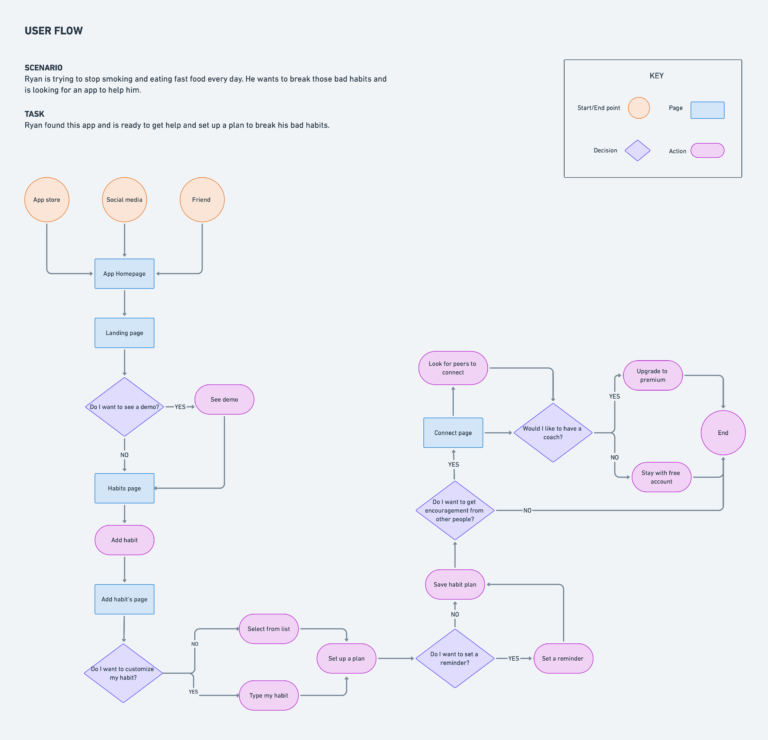
Mapped the key paths users would take to create a habit plan, track progress, and engage with supporting features.
product strategy
From Tracking Habits to Supporting Behavior Change
Research showed that simply tracking progress wasn’t enough. Users needed a clear path forward, visibility into their progress, and encouragement to stay committed.
I shaped the product around four experience pillars that translated these needs into the core experience.
01 · Replace
Help users create a plan that pairs an unwanted habit with a positive alternative.
02 · Track
Make progress visible over time so users can see how their behaviors are changing.
03 · Reflect
Help users recognize patterns through notes, calendars, statistics, and reminders.
04 · Connect
Provide encouragement and support by connecting users with others working toward similar goals.
Exploring the Experience
From Strategy to Early Concepts
I explored how the core experience principles could translate into the product through sketches and low-fidelity wireframes. These early concepts helped me define the habit-plan flow, organize key features, and establish how users would track and reflect on their progress before moving into high-fidelity design.

Visual System

Core design decisions
Turning Strategy Into the Experience
The experience principles shaped the core features of Flip Habits. Each solution was designed to help users move from intention to action while staying aware of their progress and motivated throughout their journey.
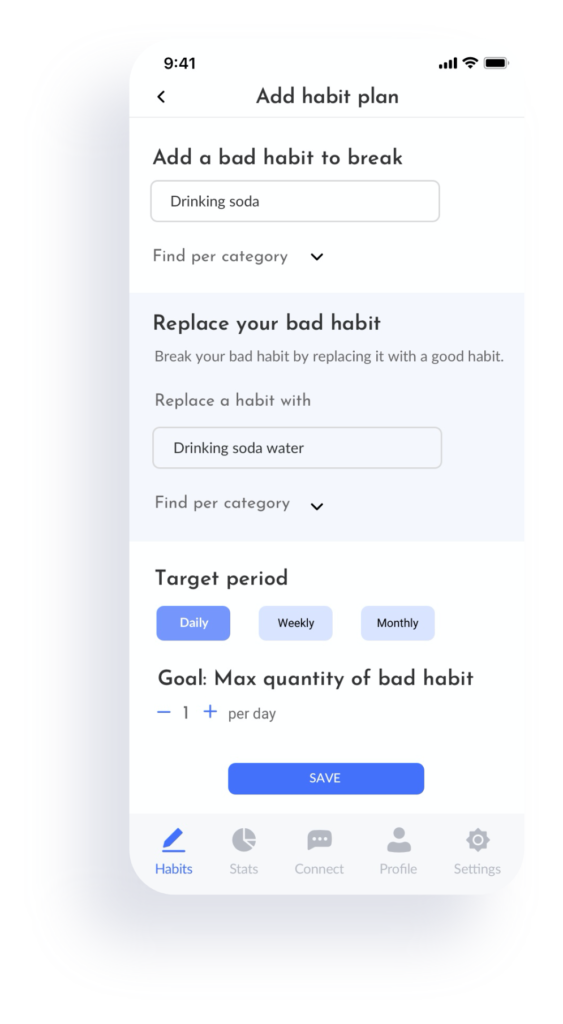
01 · Replace an Unwanted Habit With a Positive One
Design Consideration
Users needed more than a way to record an unwanted habit. They needed a clear action they could take instead.
Design Decision
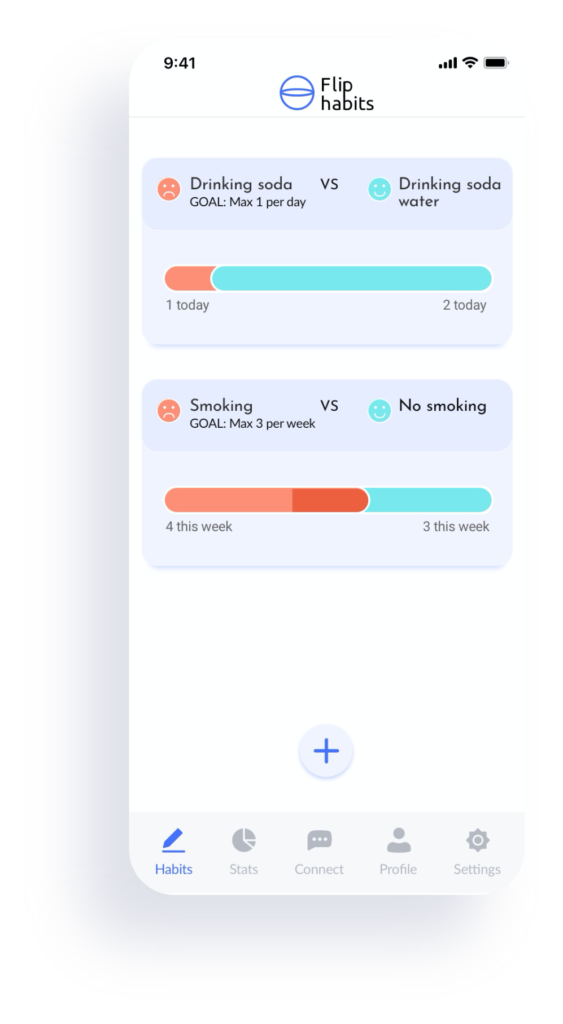
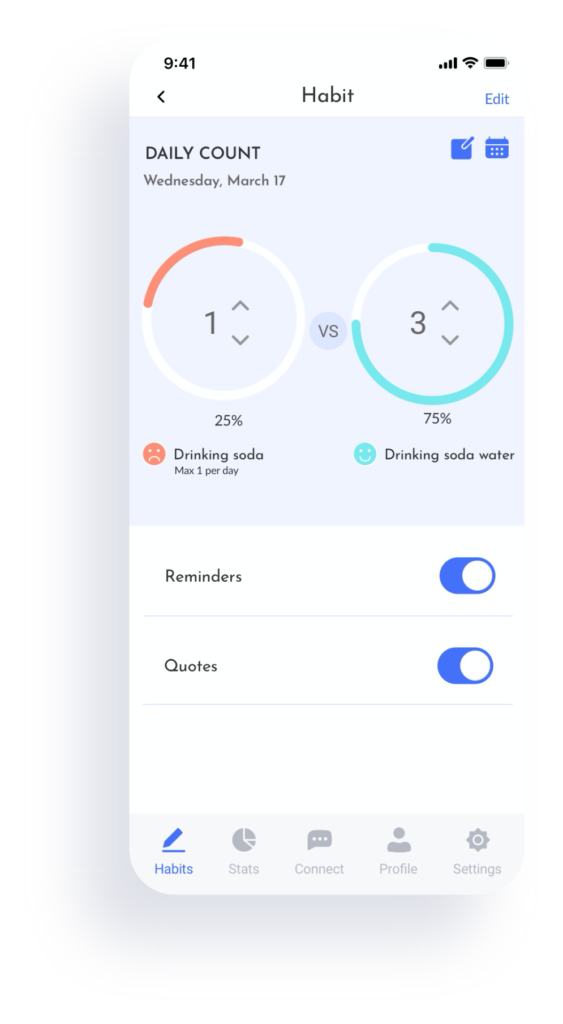
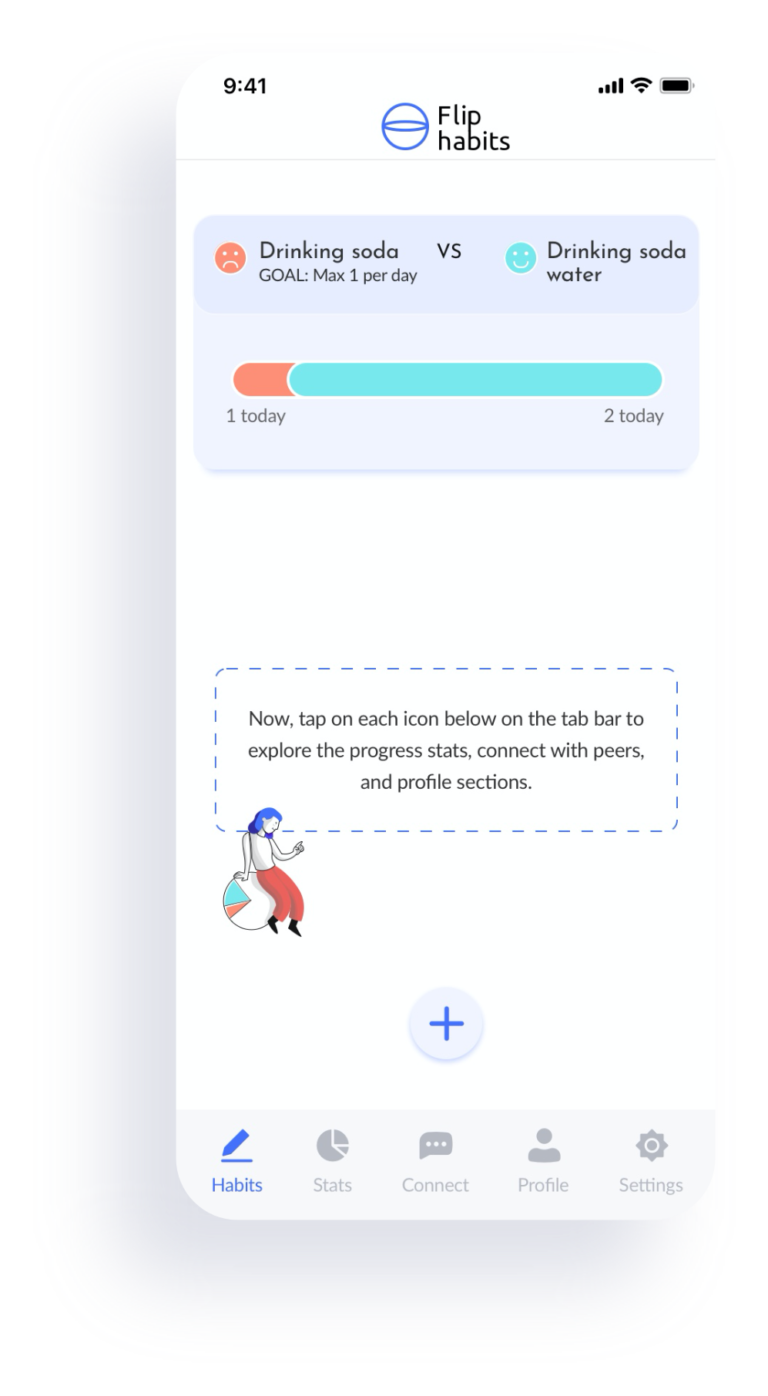
I designed the habit plan around pairing an unwanted behavior with a positive alternative. Users define what they want to change, choose a replacement behavior, and set a goal. Both habits are then tracked together, giving users a more actionable path toward change.
02 · Make Progress Easy to Understand
Design Consideration
Seeing progress was an important source of motivation, but a streak alone couldn’t show users how their behavior was changing over time.
Design Decision
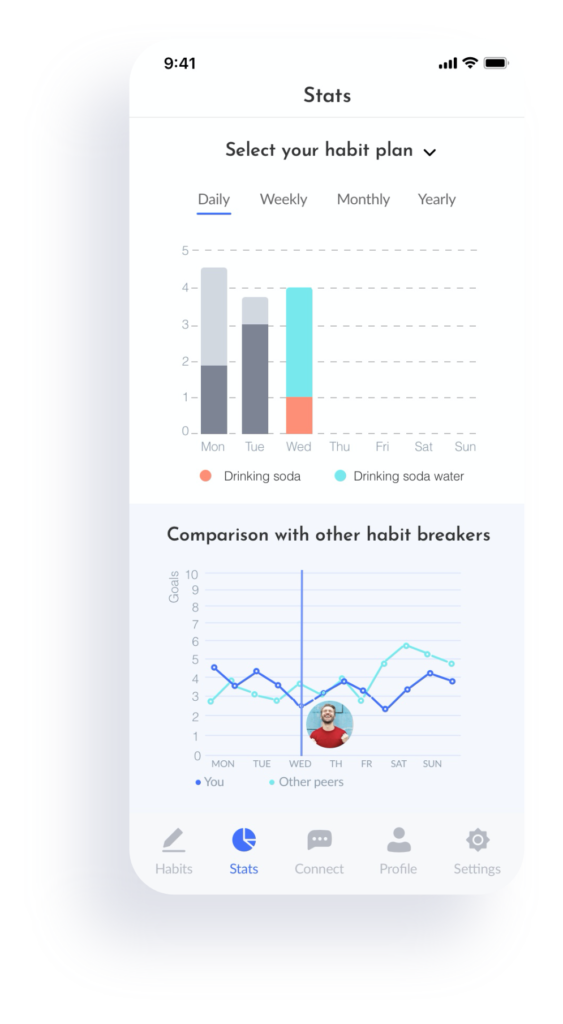
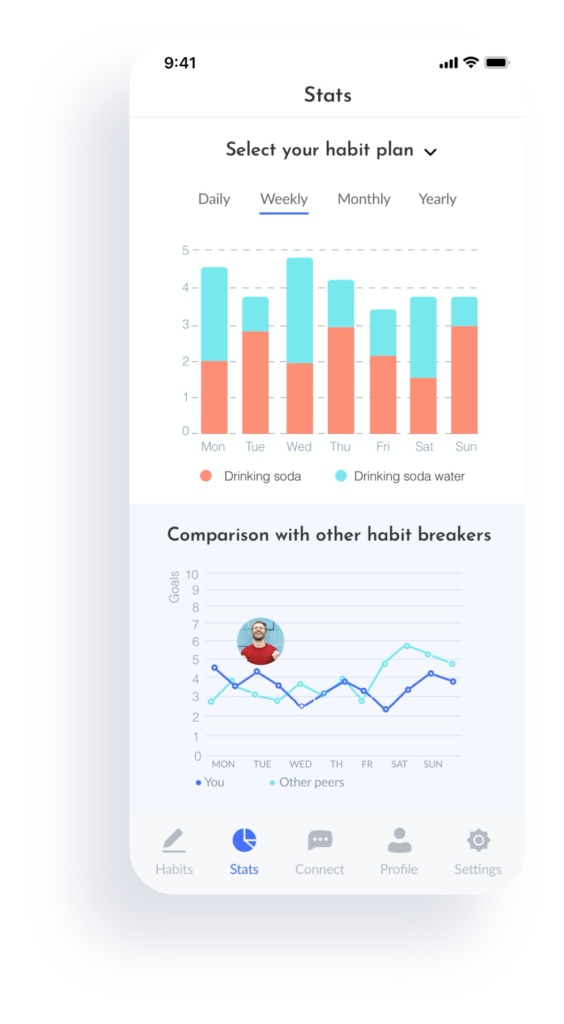
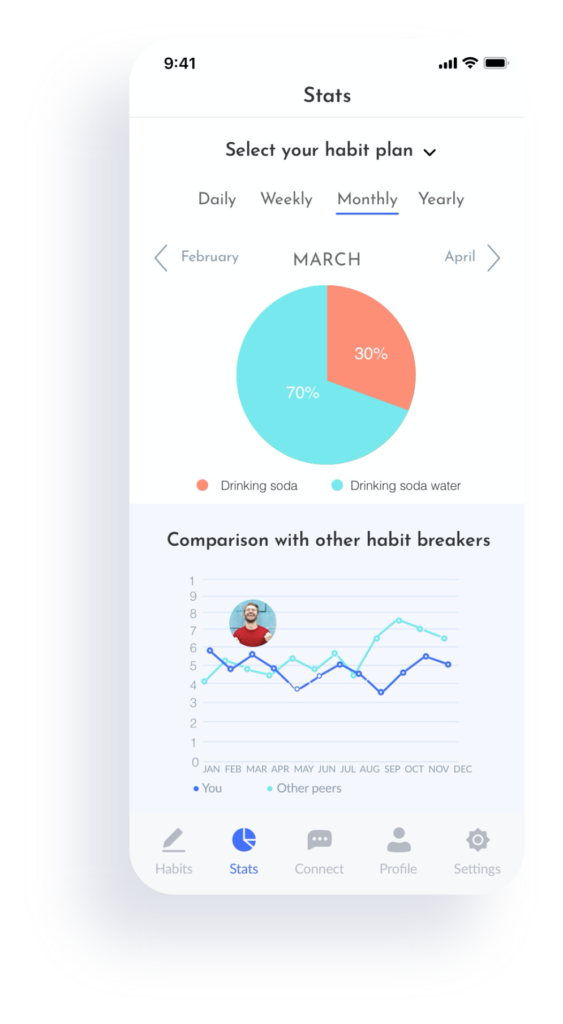
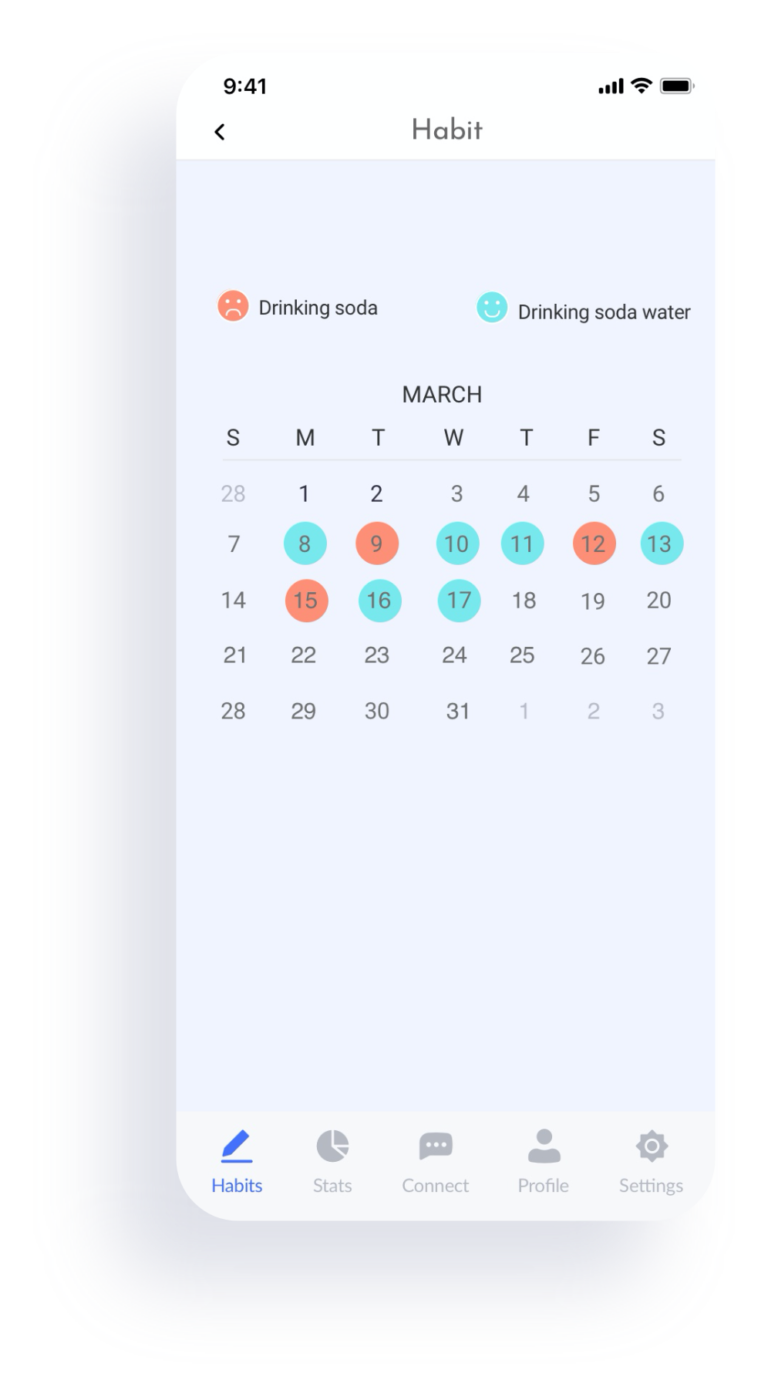
I designed multiple ways to visualize progress across habit cards, a calendar, and statistics. Users can compare their unwanted and replacement behaviors across different time periods, making changes and patterns easier to recognize.
03 · Support Reflection Along the Journey
Design Consideration
Behavior change isn’t always linear. Users needed a way to capture experiences and better understand what might be influencing their progress.
Design Decision
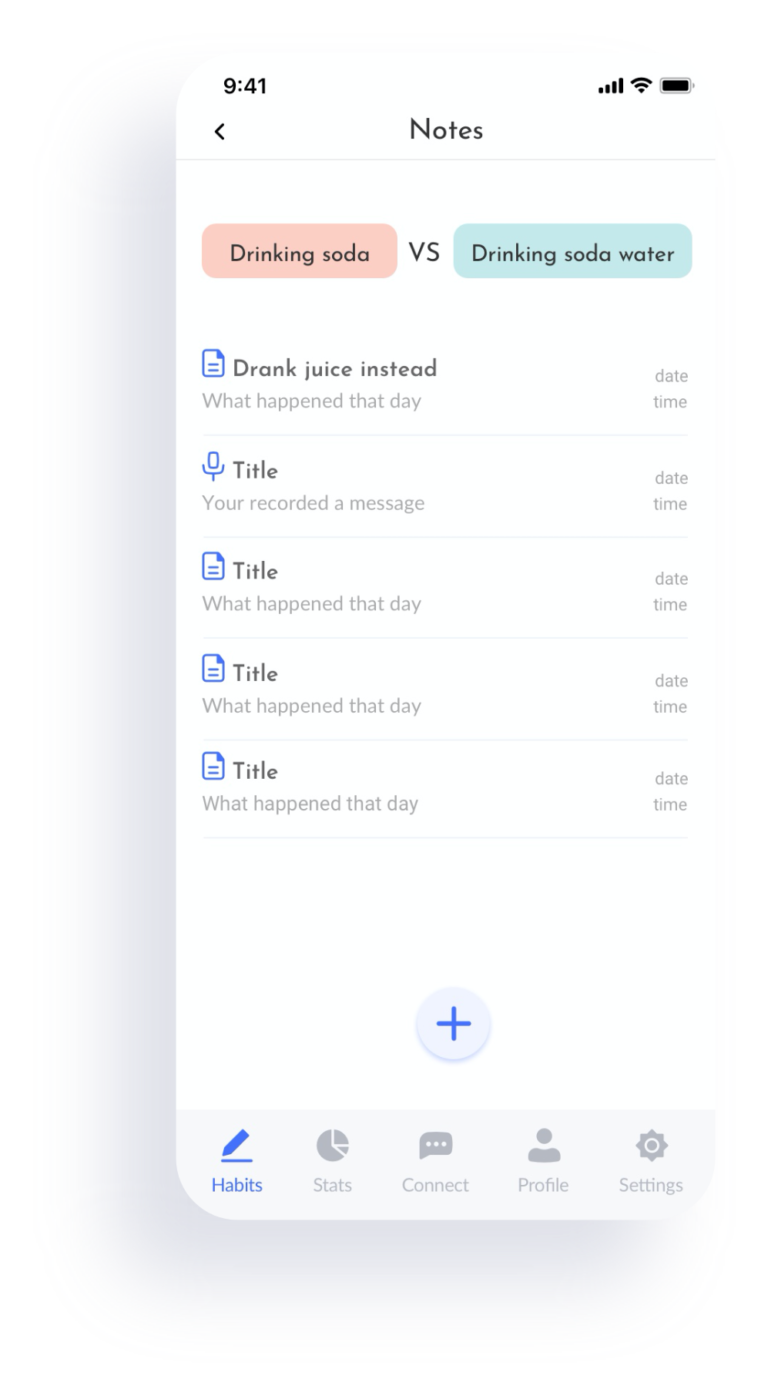
I incorporated notes, reminders, motivational content, and calendar activity into the experience. Users can document their journey, revisit previous activity, and recognize patterns that may be helping or disrupting their progress.
04 · Create Opportunities for Support
Design Consideration
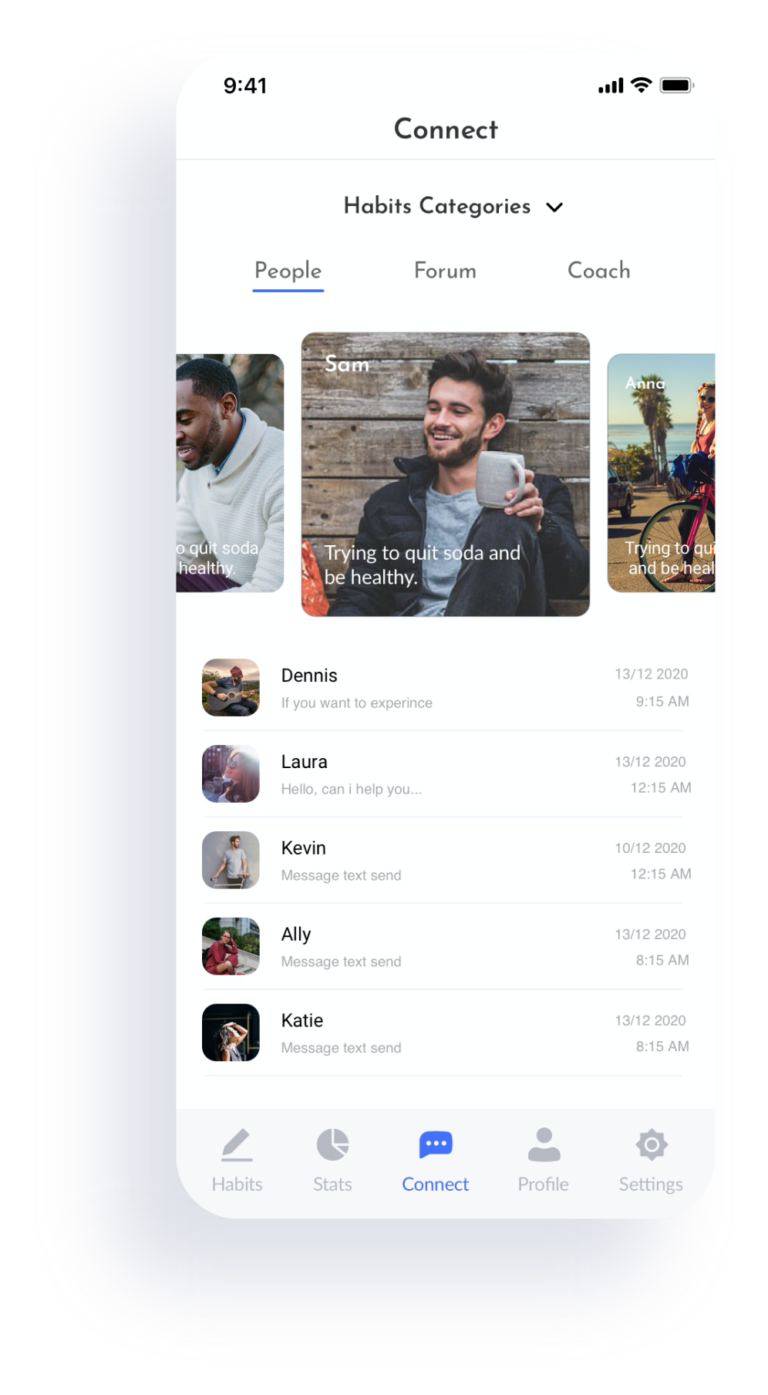
Research showed that encouragement from others and seeing people going through similar experiences could help users stay motivated.
Design Decision
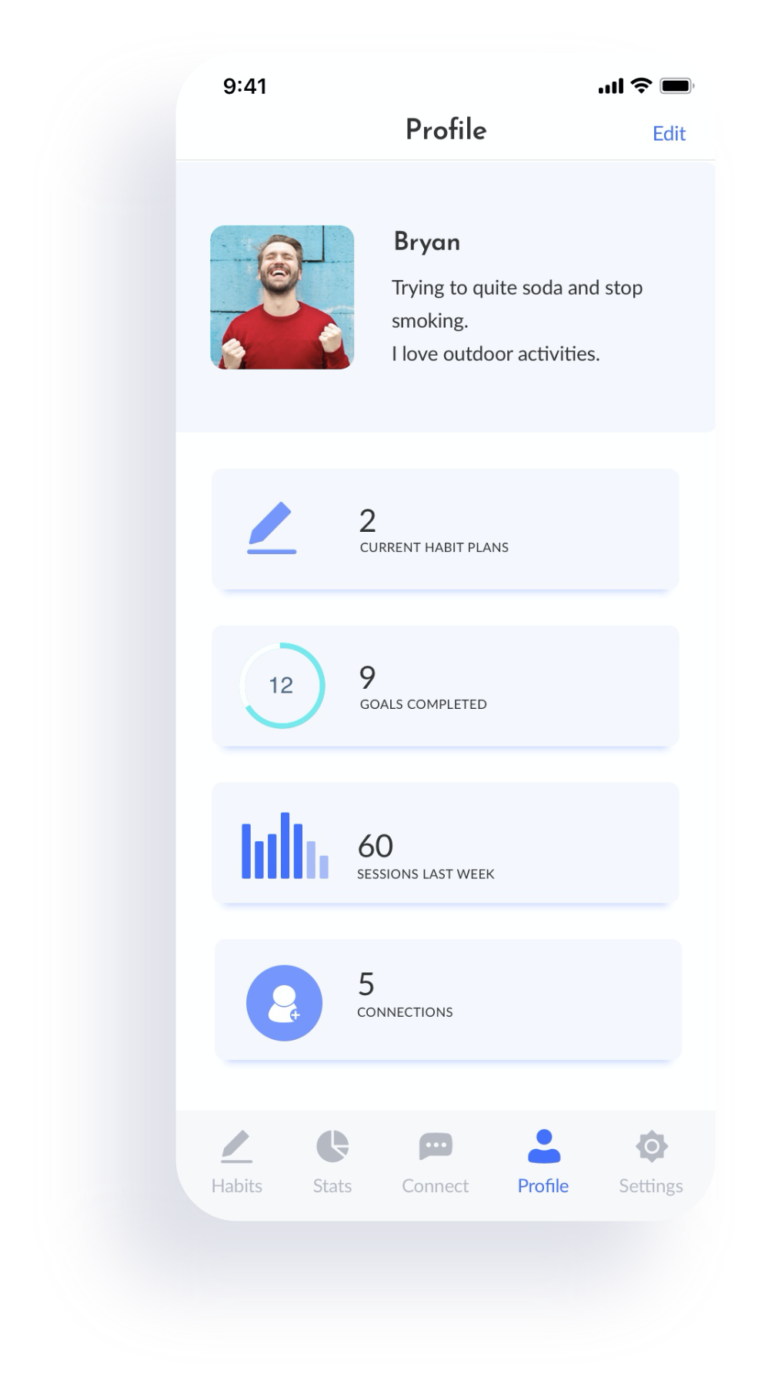
I designed the Connect experience to give users access to people working toward similar goals. Users can participate in conversations, share experiences, and find encouragement from a community facing similar challenges.
Usability testing and Iteration
Validating the Experience
I conducted usability testing to evaluate whether users could understand the habit-plan concept, navigate the experience, and track their progress effectively.
Testing validated the core experience while revealing opportunities to simplify onboarding and improve how progress was communicated.
What Worked
Habit planning felt intuitive
Participants were able to create a habit plan and understand how to begin tracking their progress.
Navigation was easy to understand
Users described the overall navigation as intuitive and responded positively to the clean visual design.
Community resonated with users
Participants saw value in connecting with people working through similar challenges and receiving support from others.
What Needed Improvement
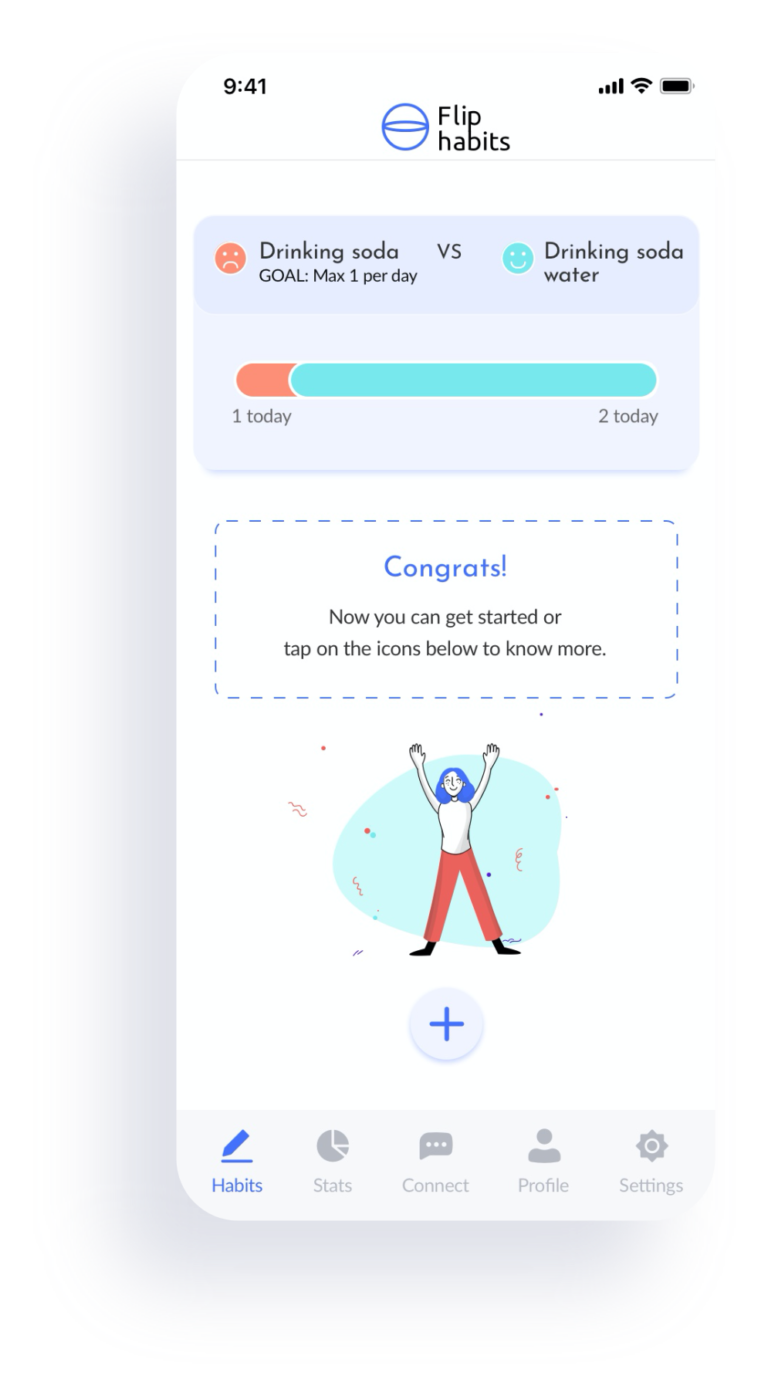
01 · Simplify Onboarding
Finding
While users found the onboarding demo helpful, some felt that it required too many steps.
Iteration
I reduced the number of onboarding screens and changed the flow so users could start using the app sooner rather than being required to explore every navigation option.
02 · Clarify Progress in the Calendar
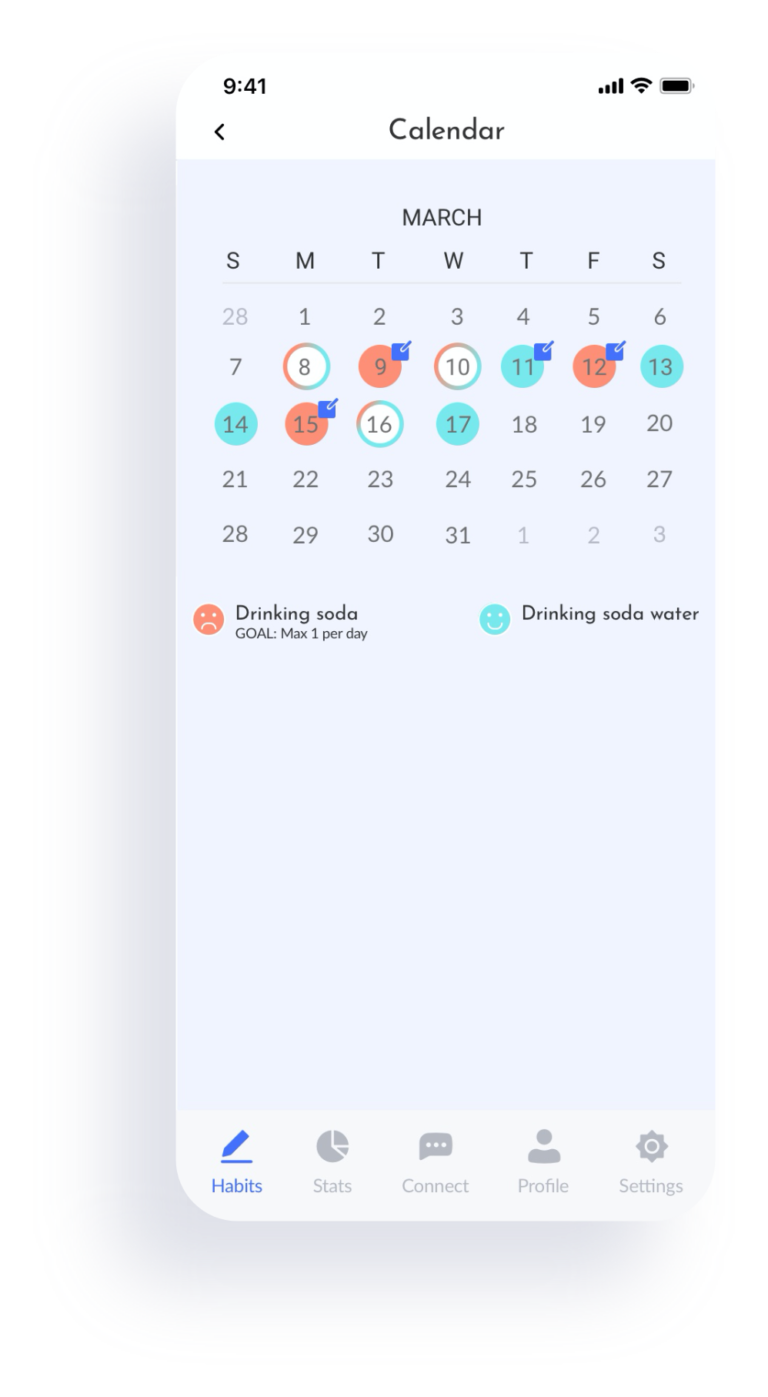
Finding
The calendar needed clearer visual cues to help users understand their daily activity.
Iteration
I refined the calendar states to distinguish between days when users completed the positive habit, the unwanted habit, or both. I also introduced a note indicator for days containing a journal entry.
Outcome and reflection
Designing Beyond Habit Tracking
Flip Habits evolved from a habit-tracking concept into an experience centered on helping users take action, understand their progress, and stay motivated while replacing an unwanted behavior with a positive one.
Usability testing validated the core habit-planning experience and overall navigation while revealing opportunities to simplify onboarding and make progress easier to interpret. Those findings informed targeted iterations to the onboarding and calendar experiences.
What I Learned
This project reinforced the importance of designing beyond the immediate interaction. Tracking can show users what happened, but supporting behavior change requires considering what helps them decide what to do next, recognize progress, and stay motivated over time.
If I continued developing Flip Habits, I would expand the research with behavioral experts and explore how rewards and lightweight gamification could reinforce progress without making streaks the primary measure of success.
Tracking can show users what happened, but supporting behavior change requires considering what helps them decide what to do next.